Alternative method for replacing starter motor. problems.
One of the major problems with starter motor problems /failure on the 'A' Class is that the engine has to be dropped to get at the starter motor which is sandwiched between the under floor on the passenger side and the top of the engine.
Lowering the engine for changing the starter motor is the method used by Mercedes-Benz Workshops and a bill for close on £1000 would not be out of order with VAT currently being at 20% 04/01/2011.
There would be some advantage to having my (lofty's) CD to hand as it includes files of information which would be useful when undertaking tasks of this type. Including lowering the engine, to gain access to the starter Motor from below the engine. Purchase CD now
The question comes when the car is still very serviceable and in good general condition but the replacement of the starter and labour costs to remove and install it exceeds the value of the vehicle.
Well Tom it appears has come up with the answer, and forwarded the procedure in the hope that it will assist other owners faced with the same predicament, provided you are prepared to do the work yourself or can find a mechanic who will undertake the work or assist you with the job, it can be done without raising the car or dropping the engine albeit both he and mike who has also followed the procedure do emphasis that there is still quite of lot of work involved and that some mechanical knowledge and skills skills are required and an advantage. and therefore you should have a good understanding of what you are undertaking before commencing work, and to obtain not only the correct replacement starter for your car but also other spares which might be required during the procedure.
In the first instance I recommend you read fully mypage.43 with emphasis being on this page 66.
Also make yourself familiar with the photos on mypage.33 in respect of the precise location of the starter Motor.
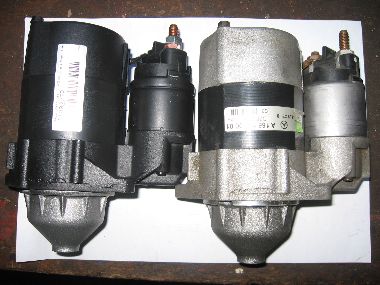
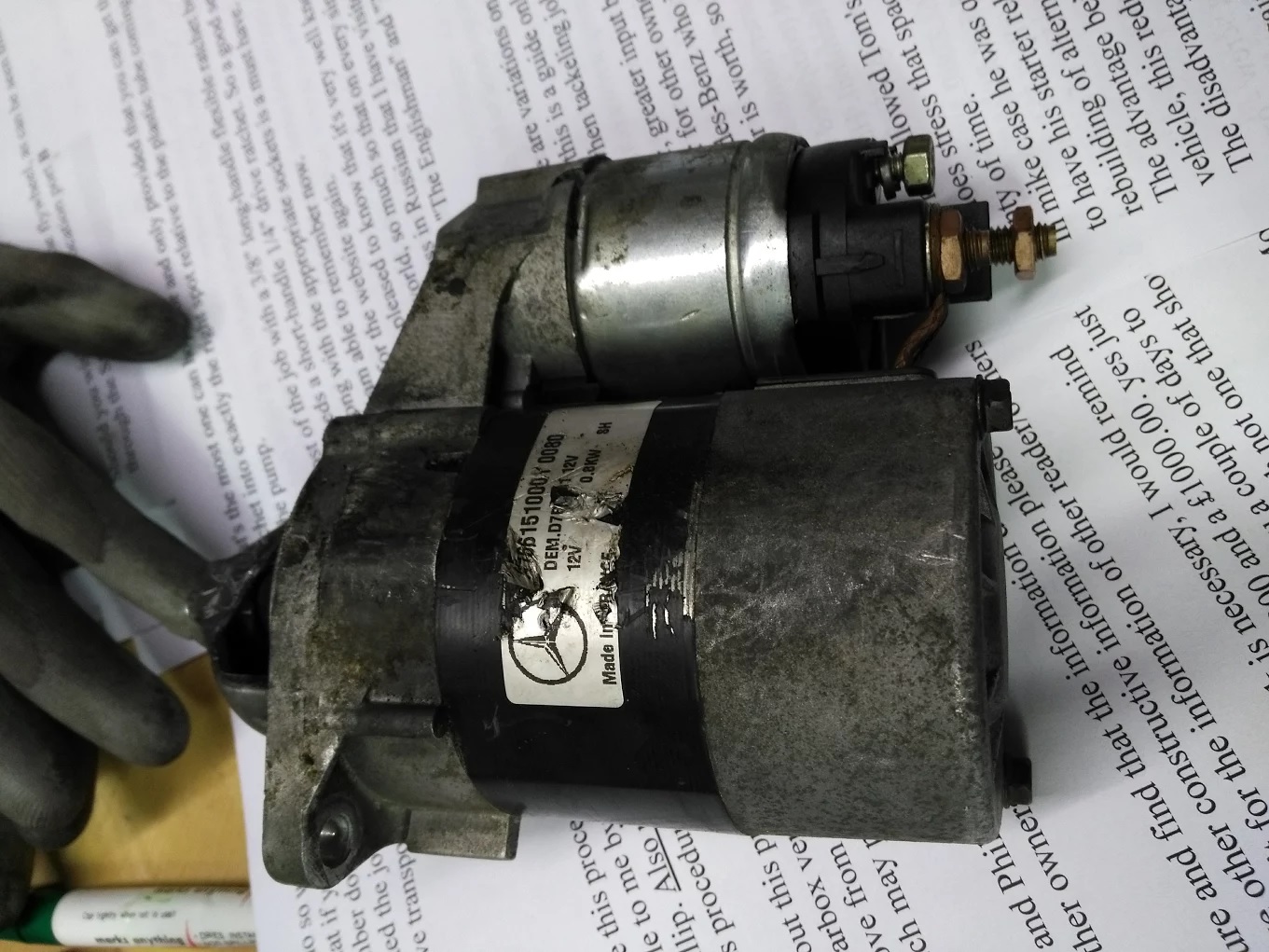
Also be aware that the starter motor you install must be matched to your Vin number, failure to do this and there is every chance the starter motor although not coded to the individual car when fitted will still not operate, not because it is defective, but because it is the wrong type motor for your particular 'A' Class' car's electronics set-up.
Before Starting, Spares required.
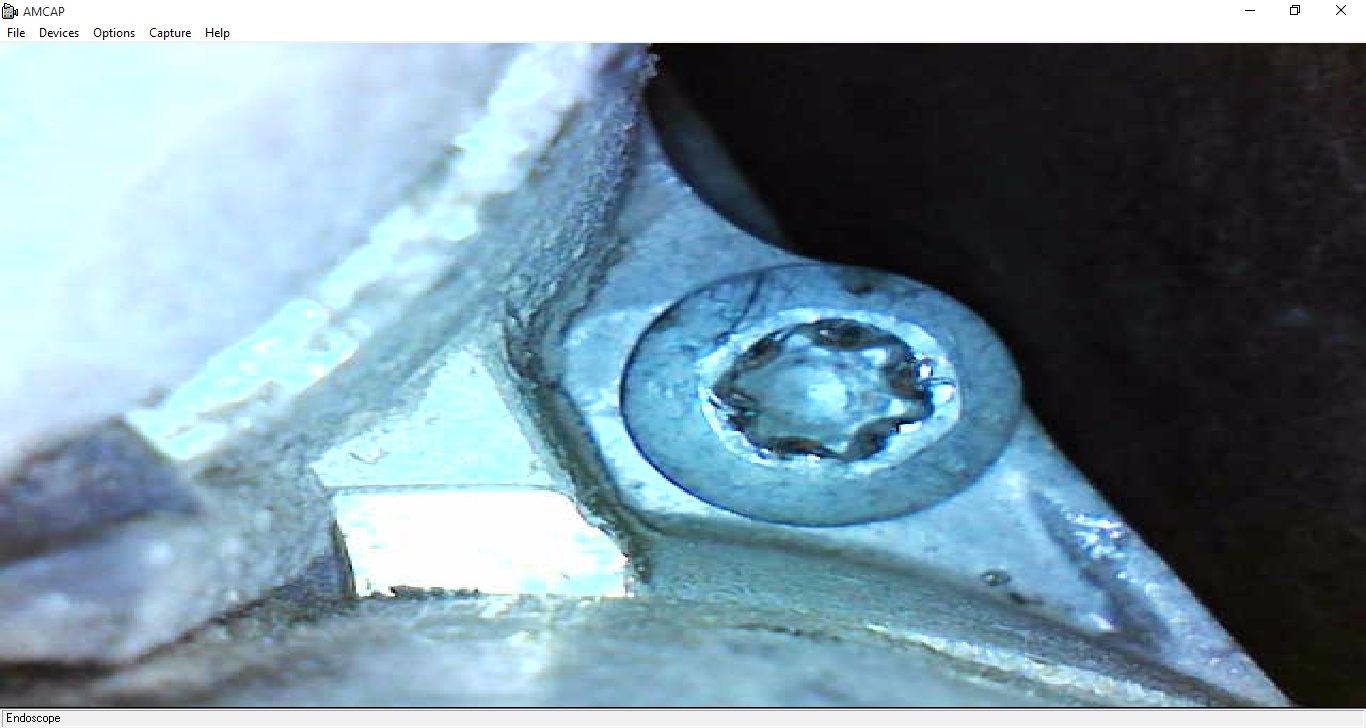
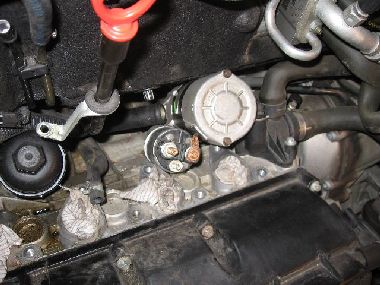
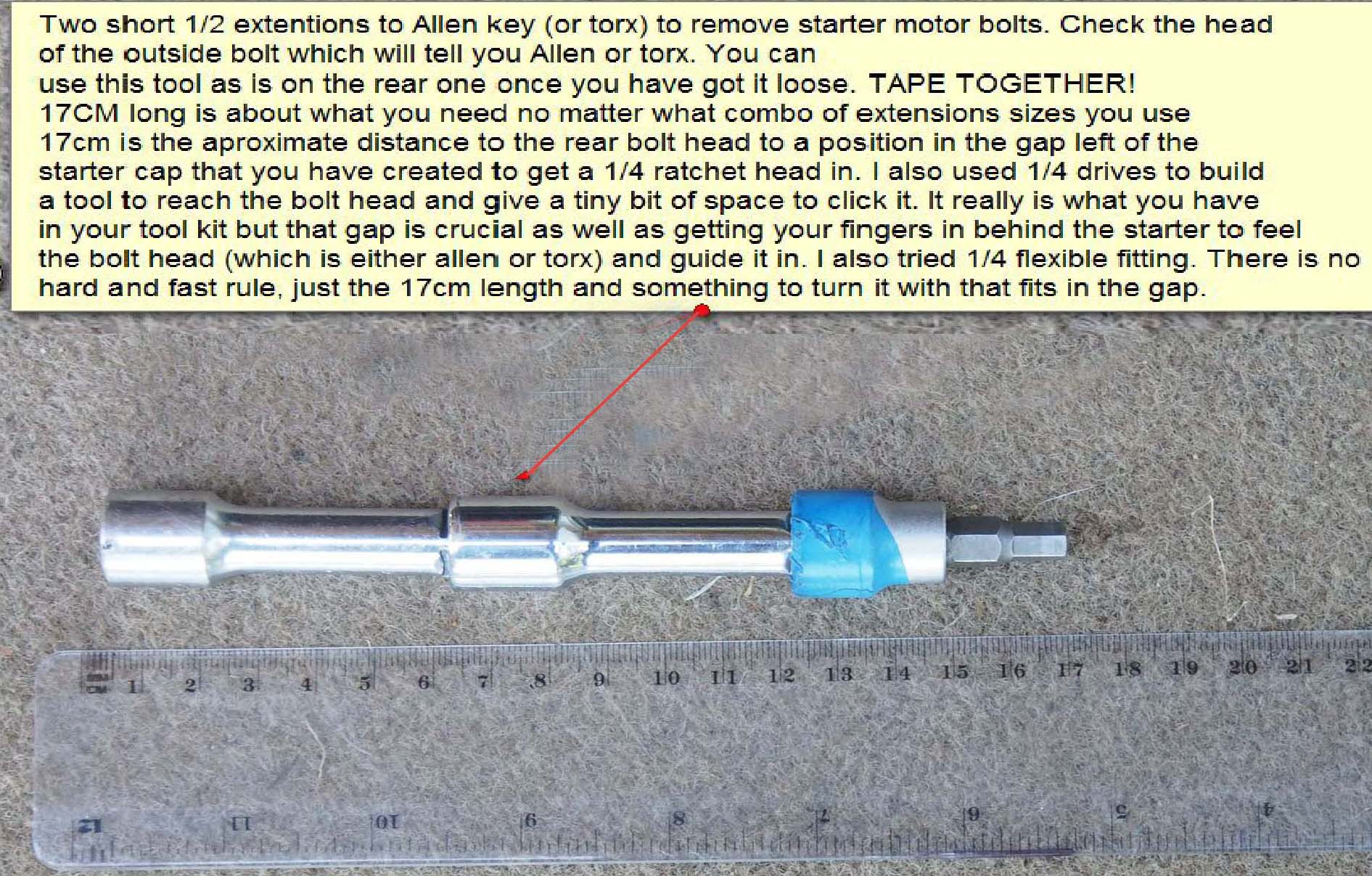
1.
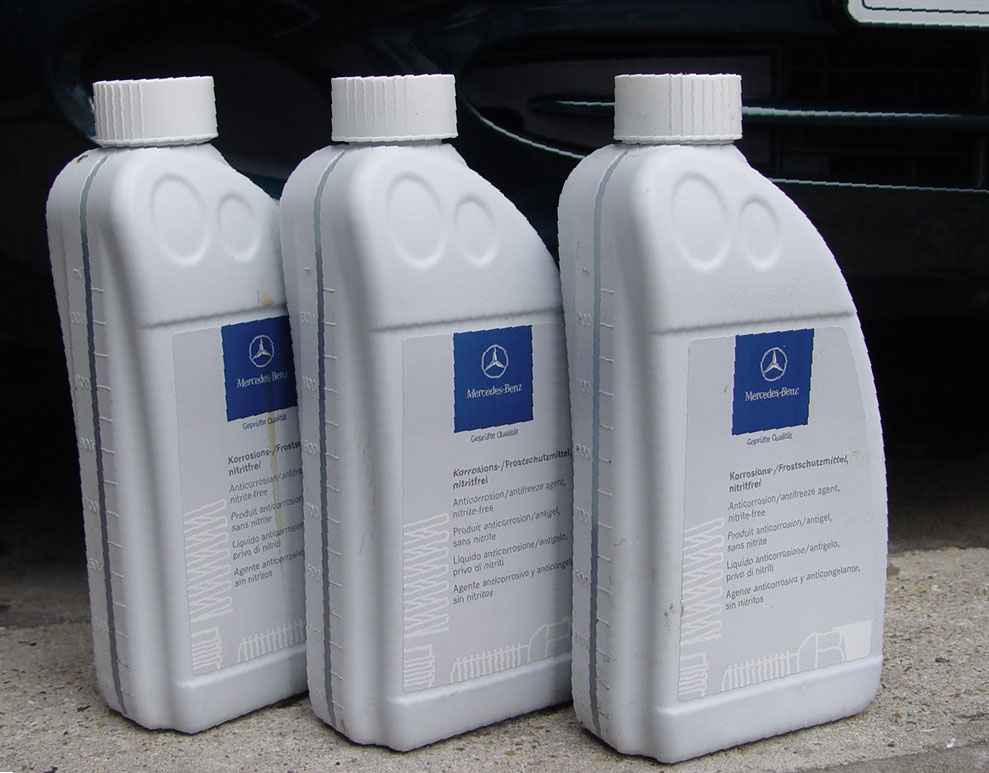
Coolant fluid If your coolant has been replaced in the last two years then it can be drained and re-used topped up as required with new fluid. If not then you are advised to replace it with new. for further details see page 43.
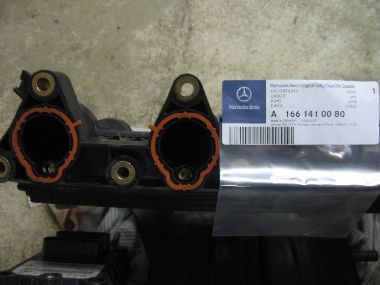
2.Inlet manifold rubber gasket.( it is highly recommended that you replace this as a matter of course even through the existing unit may be serviceable , Failure to do so may result in an inlet manifold leak which will affect the air fuel mixture reaching the engine with the result that the engine management light may well show after only a few miles.
3 Injector sealing 'O' rings X 8 " per injector ( Mike has mentioned that it is not necessary to remove the injectors and fuel rail from the inlet manifold and therefore these may not need to be disturbed. However the 'o' ring seals are only a few pence each it may be worth replacing them while you are able to easily get at them and there replacement may save work later on.
You may well find that the existing gasket and 'o' ring's appear reusable, however as a precaution again air leaks on the inlet manifold & injectors on re assembly I strongly advocate that they be replaced as a matter of course as a leak on either component may cause an air leak causing your car to receive a weak fuel mixture which could cause the engine management light to show and will also damage valves in the longer term. Eugene, of Australia now having done the job twice also offers this advise:- Just another point. The fuel injectors actually take two '0'rings eachand the parts advisor at Merc said he would not even think of not replacing them once the injectors have been removed. (this is to clarify the alternative starter procedure. I can also confirm that without removing the water pipe the rear bolt pn the starter cannot be turned. Another tip is to use a probe mirror to see the rear bolt. I found this helped a lot to undo it as I could actually see it.
4. Starter motor compatible with your vehicle. Please read page 66 carefully before purchasing your replacement starter.
(As a means of reducing costs further, there are companies that will rebuild your existing starter, this can be a safer bet than buying second hand from a car breakers yard as you are unaware of the condition of the starter purchased nor can you guarantee that is compatible with the electronics of your individual vehicle.)
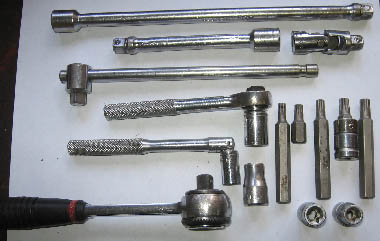
Tools required
A good range of tools is required to do this job as well as reach some of the more difficult to access bolts and fixings.
The following is in the main the procedure followed by Tom and Mike owner of 'A' class cars.
With the vehicle if possible under cover but with adequate safe lighting bearing in mind you will be removing fuel pipes.
1. Disconnect the Battery for procedure see page 35
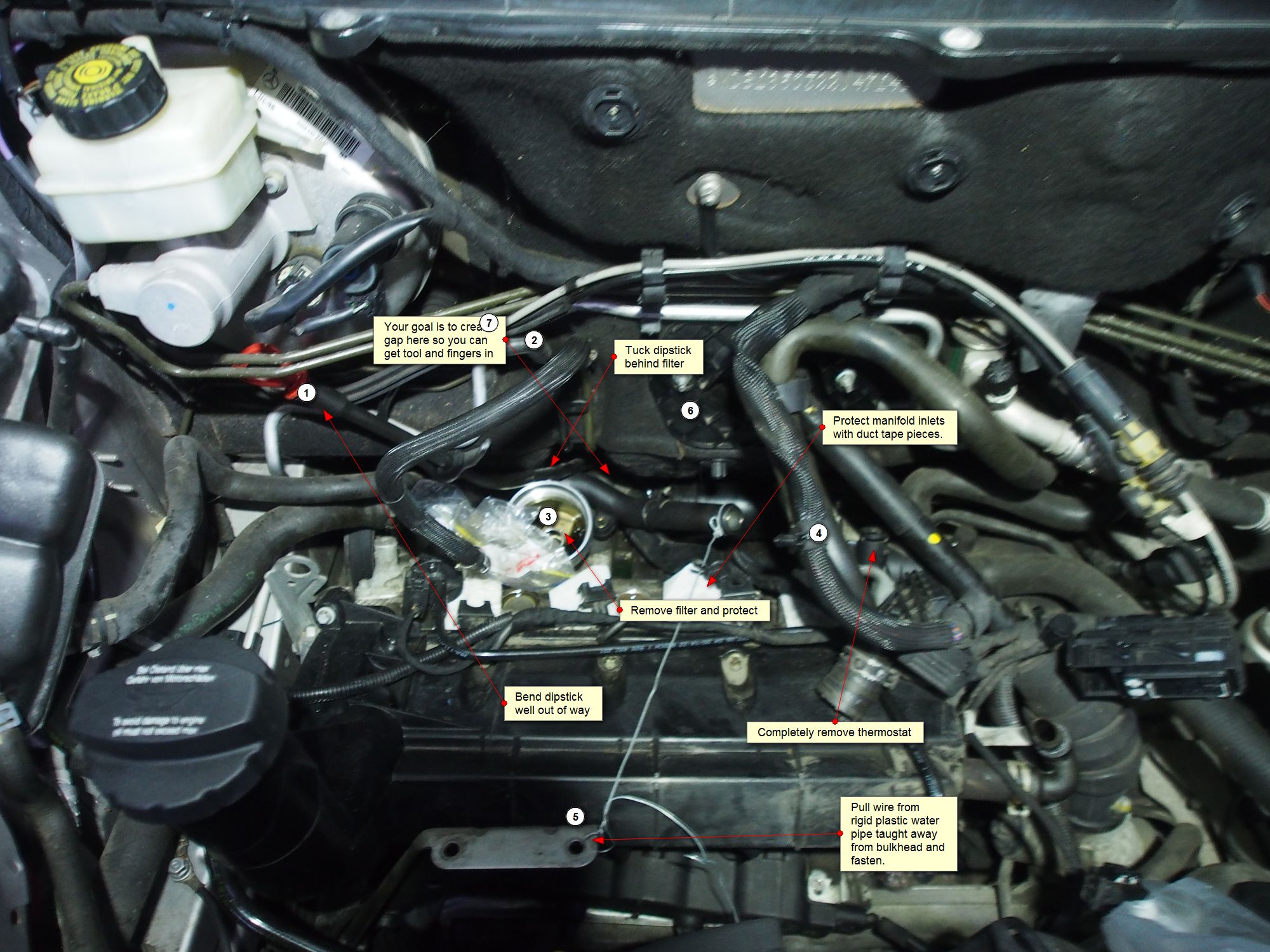
2. Drain Coolant, although I am of the opinion that only about half the coolant needs to be drained unless you are replacing as part of a two year replacement. see page 43
3. Remove connections from rear of ECU mypage.38 4. Remove air filter housing complete with filter rear of the
see page 16
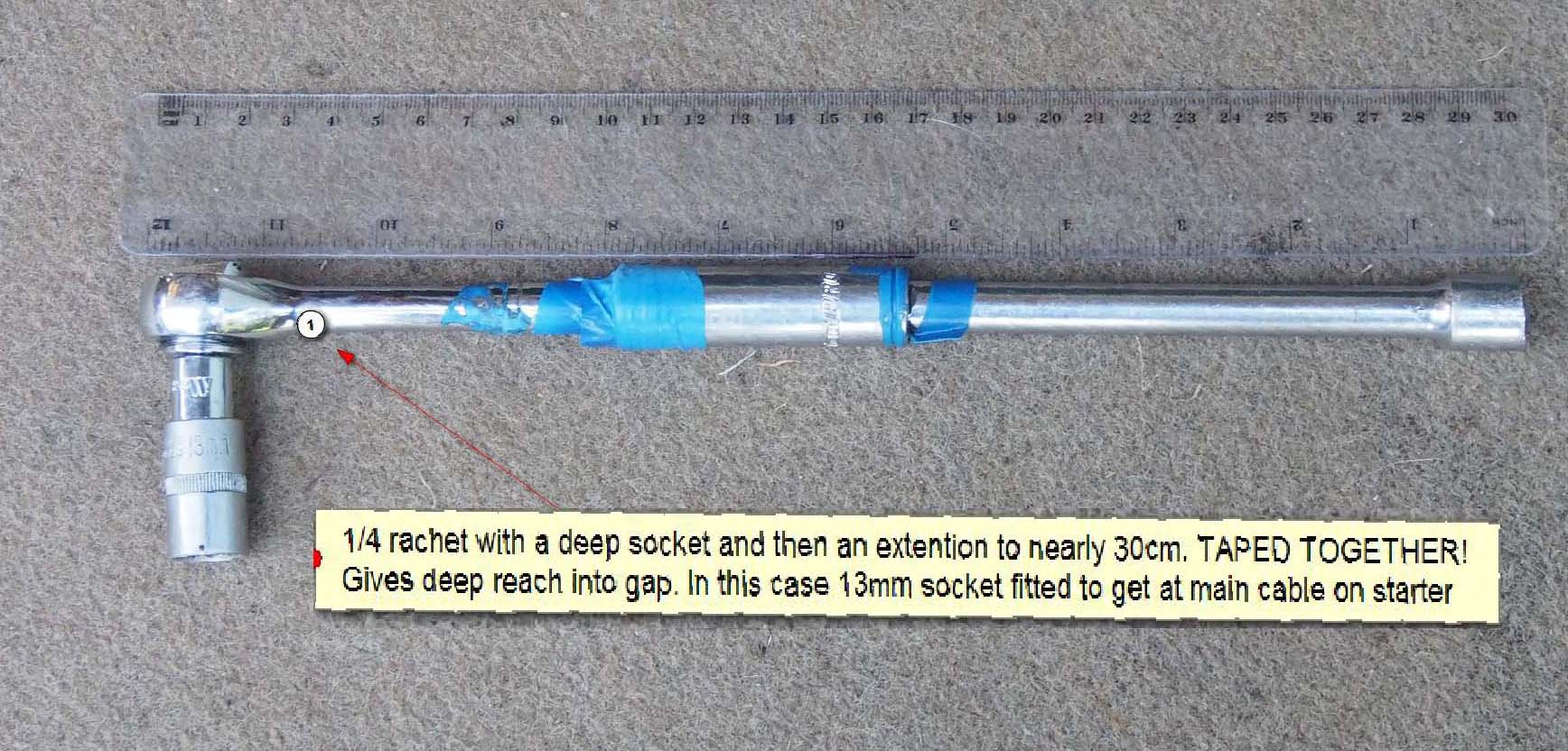
4a Mike suggests that if you are tall then there are advantages to raising the front of the car six to ten inches, thus saving your back while working on the engine. He like Tom also emphasises that space is tight and so the more compact the tools used the better, 3/8 drive drive sockets and bars being preferable to 1/2"drive which tend to be bulky when undertaking tasks such as this, however extension bars are required to make the job easier 7 swivel joints (UJs)are necessary. ( Bearing in mind the amount of money being saved in labour costs it is worth investing in these tools if you can do the job yourself.
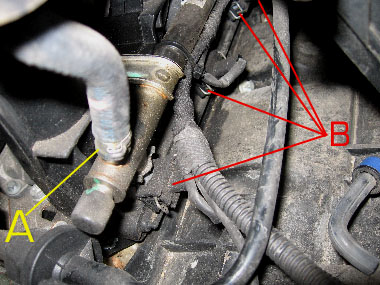
5. Disconnect electrical connections and fuel lines to injector rail B There is no comment from Tom about leaking fuel .however Mike did find a residue of fuel in the fuel rail, and make the point that the fuel rail has a bleed valve protected by a small rubber cap , try to prevent loss of that protective facility. ( Do not switch the ignition on at at any point during this procedure or the electric petrol pump will pressurise the fuel rail with fuel)
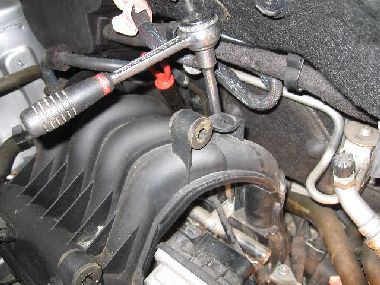
Mike found that there was a small amount of fuel left in the fuel rail although this did not present a problem, it does emphasis that if using lead lamps etc for artificial lighting then to ensure that bulbs are protected with a protective globe. Safer still still work in natural light.
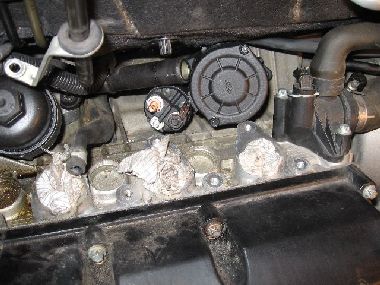
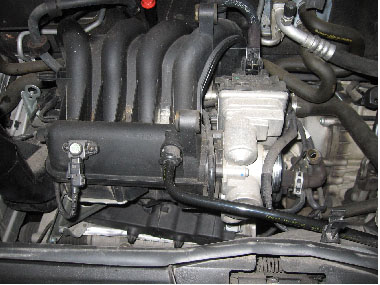
Before you start to remove fuel lines etc make sure that the engine parts are free of contamination dust etc as can be seen in the photo right, this engine is covered in dust or contamination which would be best cleaned off by vacuum or blower before removing the fuel rail and inlet manifold thus preventing the engine components from being contaminated It is advisable to cover all ports with a suitable cloth/material to prevent contamination as well as nuts etc from falling into the engine.
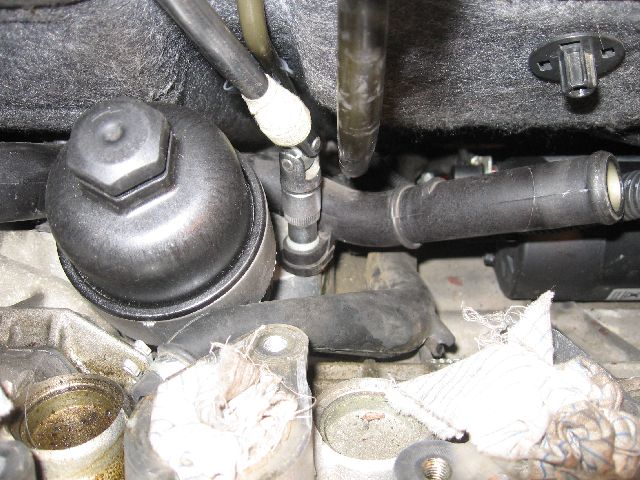
7. Remove Inlet manifold secured by Torx bolts Ensure the the inlet ports on the engine are blocked off to prevent component parts and debris falling into the engine, Mike also removed the oil fitter housing , although not necessary it did provide more room for working , but take car to cover the access holes with suitable cover to prevent foreign bodies from dropping into the open spaces created , this comment applies to all recesses created during this procedure, smooth cotton like fabric is your best bet. Do not use paper which when oil soaked is difficult to remove.
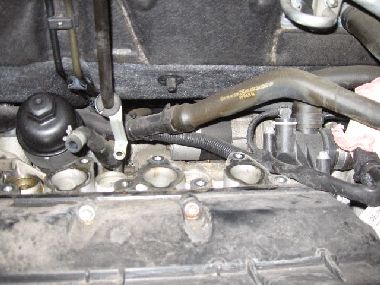
8. Remove the flexible coolant hose from the rigid pipe. Ensure the securing clip is re-usable if not replace with Jubilee type clip Release the plastic rigid pipe from its fixing.
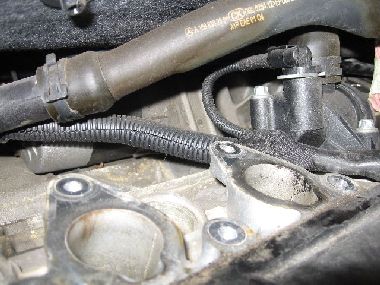
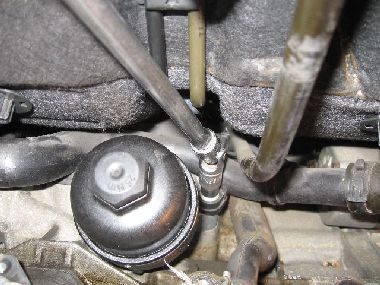
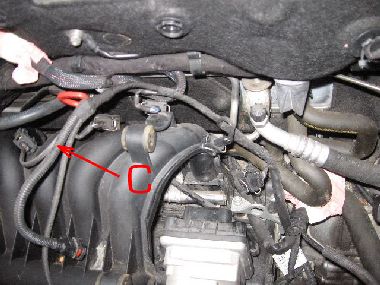
9.Remove the temperature sensor from the thermostat Housing Locate the electrical loom C complete with fittings in such a way as to avoid damage while working.
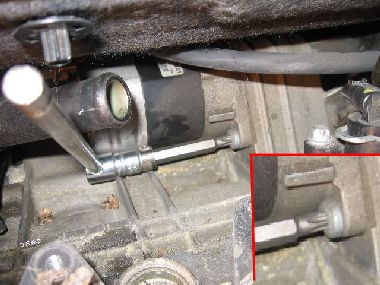
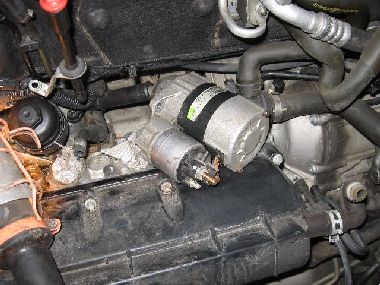
10. You should now be able to access the starter motor securing screw's, Using a long reach 6mm ball ended 'Allen' key remove the two securing screws, Although photos show 'Torx' drive screws I'm assured by Tom & Mike that theirs were 'Allen' screws The top fixing screw will be easier to get at than the bottom one, however that problem will exist whether you are working from below the engine or above. I'm firmly of the opinion that if the right hand front wing, inner lining is removed access to the starter securing screws can be gained, however a least one long extension bar would be required. along with a socket and 6mm 'Allen' bit.
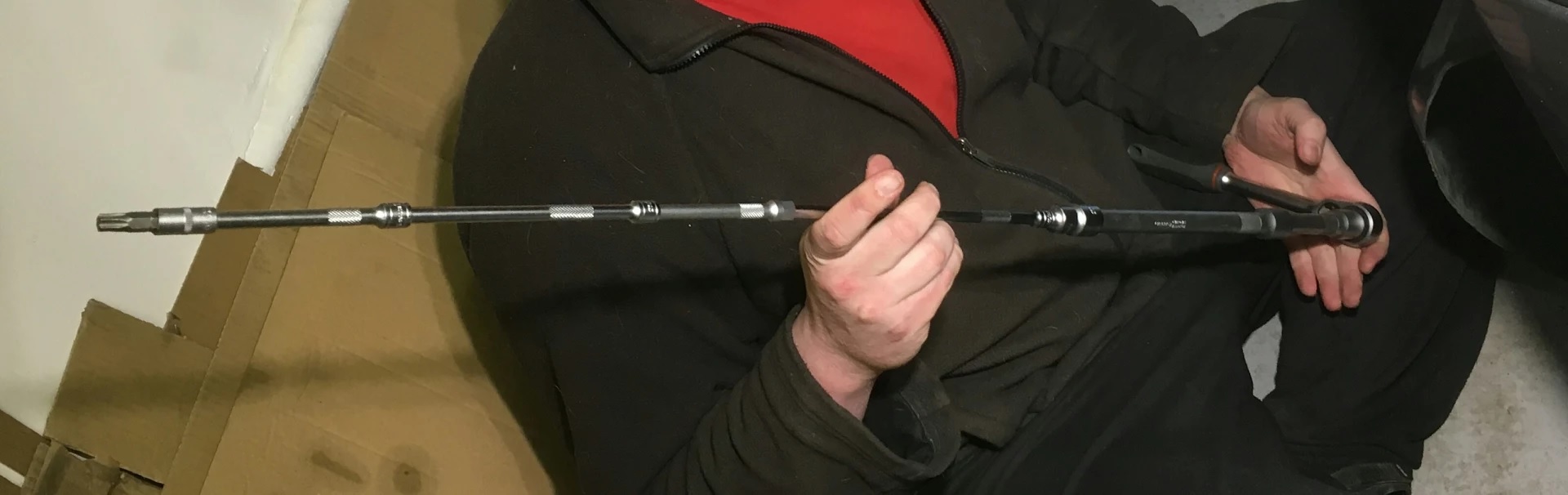
Note John a fellow owner has just mailed me 13/09/11 to say that he has just changed his starter using this procedure but found it necessary to remove the oil filter complete with housing along with the plastic coolant pipe, he maintains that without their removal there just is not enough room to get at the rear fixing.
For reference John's car is a 2001 A140 petrol with a manual gearbox. Thanks John.
11 Disconnect the electrical connection to the starter and starter solenoid This will need to be done before the starter can be removed due to the length of the cable which is fed from below.
12 Carefully remove the starter motor, (working space will still be tight)
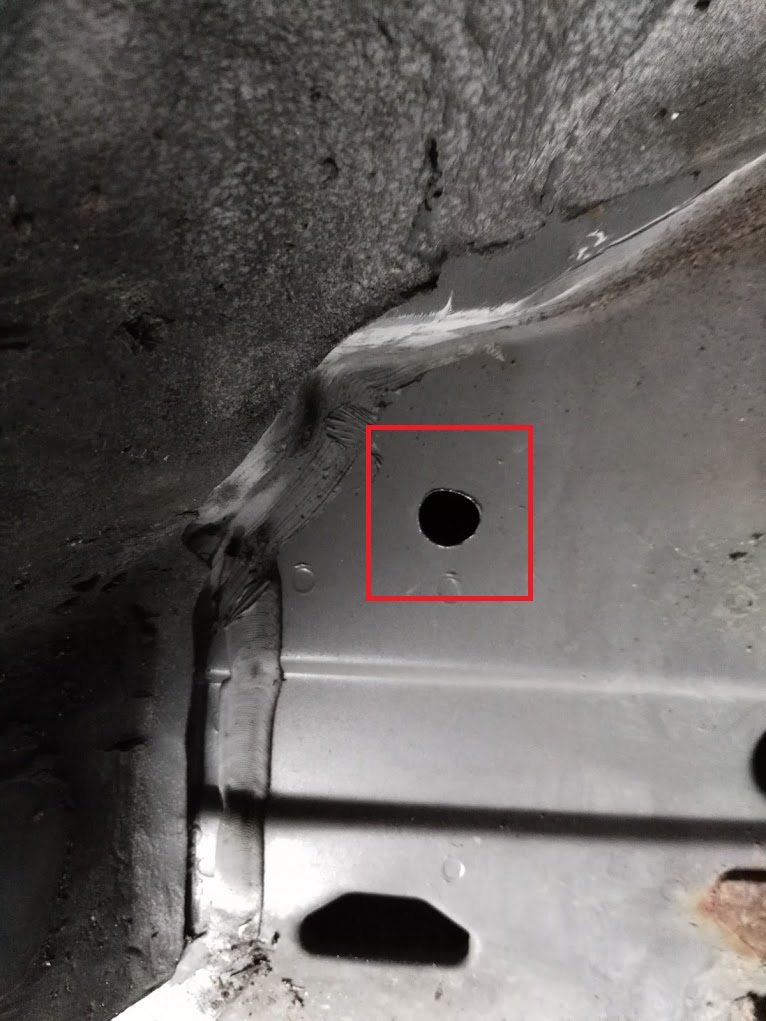
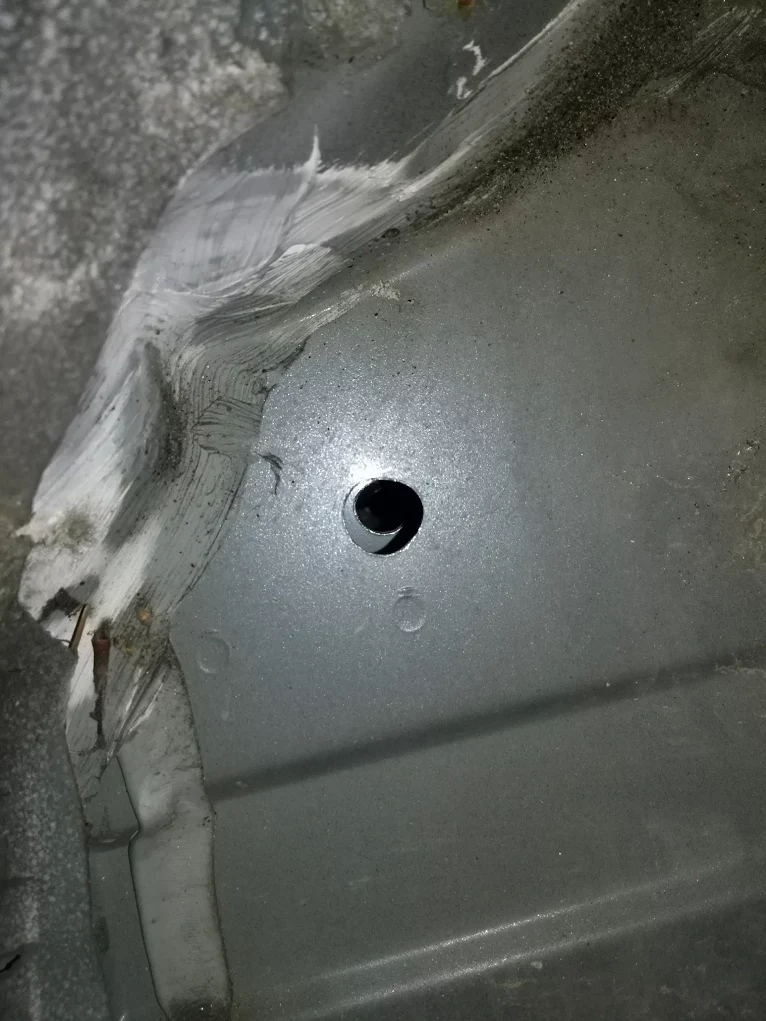
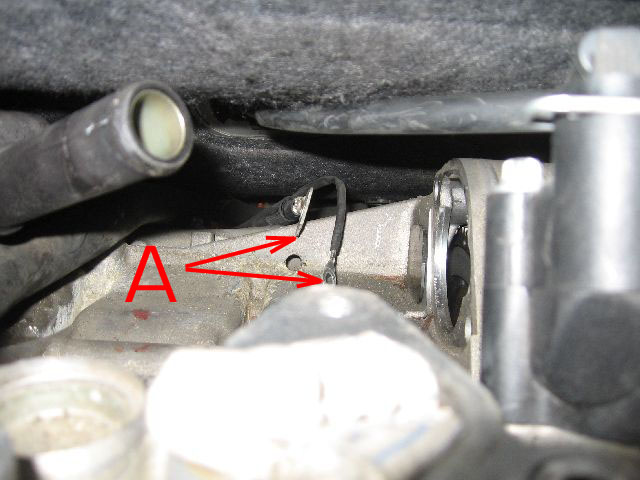
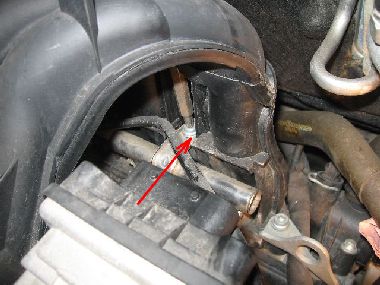
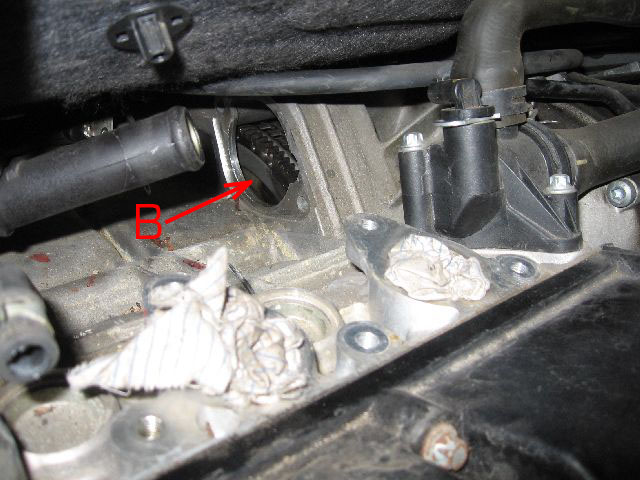
Having removed the defective starter, ensure that any debris that has accumulated in the area is carefully removed and not allowed to enter the starter motor post, Ensure you secure that tails A of the disconnected cables that go to the starter and solenoid, this will prevent then dropping down under the engine which at this stage would be wholly inconvenient as the car would have to be raised and floor pans released to retrieve the wires Should you wish to inspect the flywheel, as can be seen this can be done through the Starter motor location port B
On completion, re-install all components in reverse order
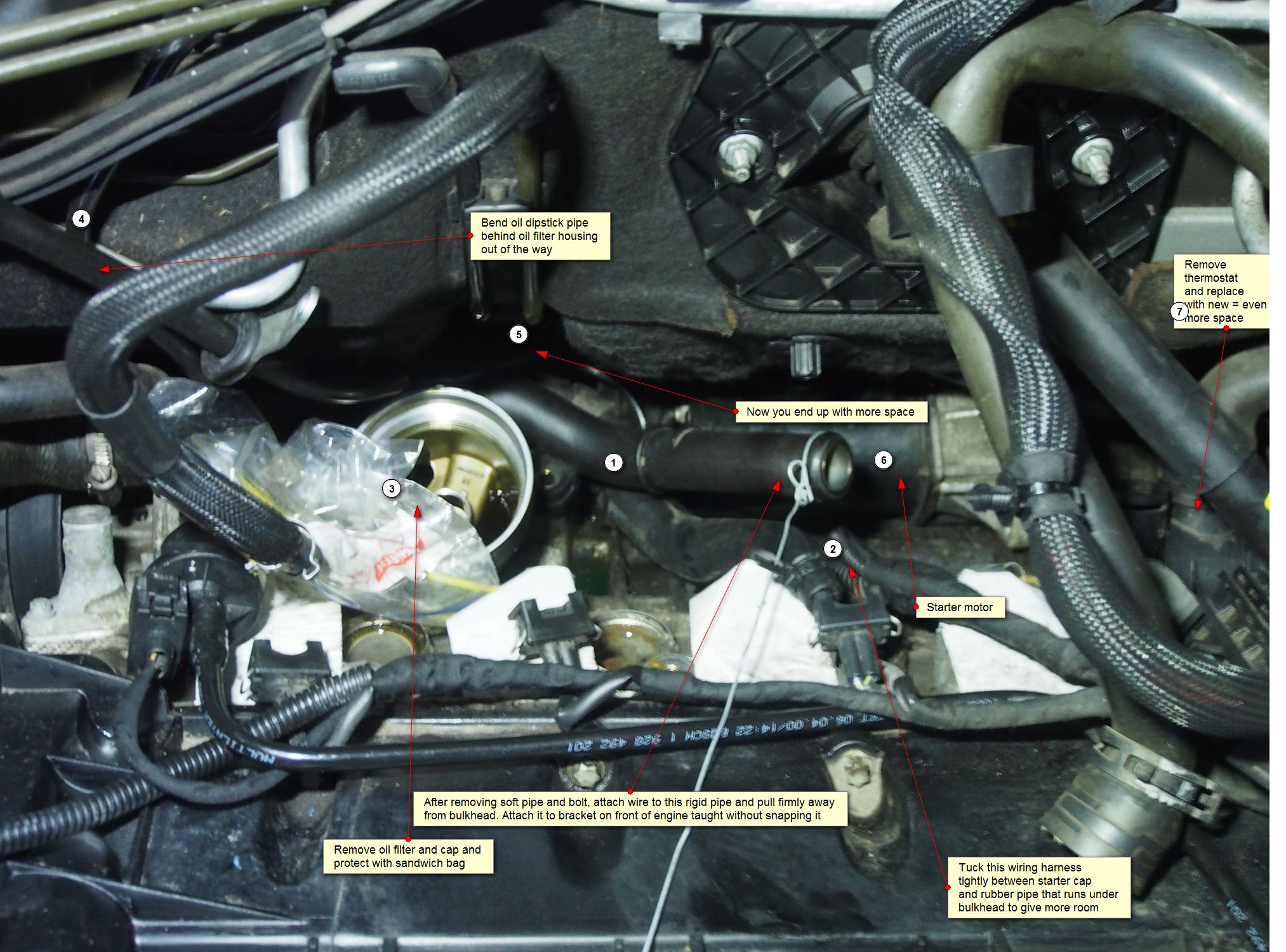
14.Remembering to replace 'O' rings on injectors as necessary
15.Making sure that the working face of the manifold is smooth and clean. Replace the rubber inlet manifold gaskets in the manifold, Although the present seals may look sound it would be false economy not to replace them at this point, should the old gaskets leak air the whole assembly will have to be removed again.
16. Remove the top of the air filter housing after fitting, to confirm the Filter element is correctly located/positioned
Mike who followed Toms procedure had no problems , however he like tome does stress that space is tight and that if tackling this job allow plenty of time. In mike case he was quoted 320€ for a replacement starter and so chose to have his starter rebuilt by a professional company dealing with rebuilding of alternators and starters . The advantage being that the correct starter was being re-fitted to the vehicle, this reduced his cost to between 100-150€ The disadvantage being that the car will be longer off the road. I Lofty again stress do not tackle this job unless you are fully confident there is a lot to disassemble and replace and to do so without a good knowledge of what you could cost you more that if you had the job done by a professional in the first place. also remember doing you do need spares available before you start, having started the job spares may not be easily obtained unless you have alternative transport.
Please note I lofty, have not had need to undertake this procedure myself and so am relying on information made available to me by fellow owner Tom with photographs kindly supplied by Phillip.
Also please be aware that it appears that both cars of which this procedure was carried out were automatic, petrol, versions, It is not known if you can carry out this procedure on diesel models in the same way, or the manual gearbox versions due to the gear change cable mechanism which may prohibit the removal of the starter from the top.
I'd like to thank both Tom and Philippe for his input & photographs which I hope, will help other owners when dealing with what is a difficult situation.
If you use this procedure and find that the information does not apply to your model or you have other constructive information please e-mail lofty who will add it for the information of other reader/owners
Although it is clear that a lot of work is necessary, I would remind owners that this job will cost between £800 and a £1000.00 yes just replace the starter, so even if this job takes you a couple of days to complete it is still a very worth while job, although not one that should be rushed or taken on by inexperienced owners.
In particular make sure you get the correct replacement Starter Motor or you will find yourself as have many none Mercedes-Benz workshops doing the job twice, If you use the incorrect starter for you vehicle I will not work so check using your 'Vin Number'